
Water utilities are under a different kind of pressure today. Not just the familiar strain of aging infrastructure or rising operational costs, but something more fundamental. The operating environment itself is shifting. Droughts are longer. Heat-driven demand is pushing beyond seasonal peaks. Precipitation patterns that once gave planners a reasonable baseline are becoming harder to rely on.
And through all of it, utilities are still expected to hit conservation targets, manage customer expectations, control costs, and maintain trust, often with tools that were designed for a more predictable world.
And the standard response to scarcity — like issue restrictions, run a public awareness campaign, or wait for conditions to improve — has long ago reached its limits. Customers have heard the message. Behavior resets when restrictions lift. And each cycle that plays out this way leaves utilities no closer to the durable conservation performance their regions actually need.
Mandates create accountability, but they do not change behavior. Conservation culture does.
The argument here is straightforward: mandates create accountability, but they do not change behavior. Conservation culture does. And building that culture requires a different kind of infrastructure. One focused not on pipes and meters, but on the ongoing, personalized engagement that turns data into customer decisions.
Why the Traditional Playbook Is Losing Its Effectiveness
The mandate-driven conservation model has a predictable rhythm. A drought declaration triggers a Stage 2 restriction. Utilities issue broadcast alerts, run public awareness messaging, and ask customers to cut usage by 15 or 20 percent. Many do. When the declaration lifts, consumption climbs back toward its prior level, and in some cases past it.
But the pattern is not a failure of enforcement or public communication. It is the natural result of a compliance-based approach. Compliance is externally motivated. It responds to pressure and recedes when that pressure lifts. It does not produce the internalized change that conservation culture requires.
Generic messaging compounds the problem. A system-wide alert asking every customer to reduce usage by 20 percent is not a personalized call to action, it is a broadcast. And an ineffective one at that. Because while it may reach every customer, it very likely moves few of them.
Behavioral research consistently shows that undifferentiated conservation appeals produce diminishing returns over time, particularly with audiences who have seen the same message across multiple drought cycles.
The result is a utility caught in a reactive loop: crisis triggers mandate, mandate triggers campaign, campaign fades, behavior resets. Each iteration costs operational resources and produces less return than the one before.
The Behavioral Gap Is Where Conservation Is Actually Lost
Utilities often frame water scarcity as a supply challenge. And it is. But the gap between a conservation target and a conservation outcome is almost always a behavioral one.
Customer water use is not fixed. It responds to information, context, and relevance. When a customer knows their household uses 40 percent more water than comparable homes in their neighborhood, they tend to act differently than a customer who has no frame of reference at all. When a customer receives a real-time alert that their usage is approaching a threshold, during a drought period, they have an opportunity to respond — specifically, personally, and in the moment.
That kind of engagement requires more than good intentions. It requires the ability to translate meter-level data into customer-facing communication that is timely, personal, and actionable. Most utilities have invested significantly in AMI infrastructure that generates exactly that kind of data. The gap is not the data, it is what happens to it next.
Smart meters can see usage anomalies, track demand patterns, and flag potential leaks. That intelligence has real operational value. But its conservation value — that is, its ability to change what customers actually do — depends entirely on whether that data reaches customers in a form they understand and can act on. Visibility at the meter is not the same as influence at the household.
What Conservation Culture Actually Looks Like in Practice
Conservation culture exists when customers understand their own water use, connect their individual behavior to their community's resource availability, and make conservation choices consistently, not because a restriction is in effect, but because they have the information and support to do so.
That shift does not happen through a single campaign. It is built through repeated, relevant interactions that make conservation feel concrete and achievable rather than abstract and imposed.
Three things drive the transition from compliance to culture.
-
Usage awareness at the individual level
-
Relevance in the moment
-
Support, not just pressure.
Customers need to see their consumption in context; compared to similar households, measured against prior billing periods, and explained against local supply conditions, for example.
When customers have that frame of reference, conservation stops being a vague collective obligation and becomes a specific, personal opportunity. Social comparison data — showing a customer how their usage stacks up against neighbors with similar household sizes — has been shown in behavioral research to produce measurable, sustained demand reductions that generic conservation messaging cannot match.
Generic alerts have low impact. Timely, triggered notifications, sent when usage approaches a threshold – like when an anomaly suggests a possible leak, or when a drought-stage change takes effect — land differently. They are specific to that customer's actual situation, delivered when the information is most useful. That specificity is what moves people from passive recipients to active participants.
Customers who feel supported by their utility engage more consistently and cooperate more willingly during scarcity events. Connecting customers to affordability options, efficiency programs, and relevant guidance before they experience a financial crisis, not after, builds the kind of trust that carries through difficult conditions.
Utilities that proactively identify high-usage, high-bill customers and reach out with program options reduce both consumption and financial vulnerability simultaneously. The conservation case and the affordability case are, in practice, the same engagement.
When utilities deliver all three consistently and at scale, they build customers who conserve as a habit. That is the foundation of conservation culture.
The Cost of the Engagement Gap
The gap between what utilities can see in their data and what their customers understand has a measurable operational cost and most utilities are absorbing it without recognizing the source.
Call center volume spikes during drought events and heat waves are largely predictable. When customers do not receive proactive communication that anticipates their questions, they call. Utilities that deploy targeted, real-time alerts during demand events see meaningful reductions in inbound inquiry volume. The customers who receive relevant, timely information do not need to reach out. Their questions have already been answered.
Affordability crises accumulate before they become visible. High-usage customers who are not identified early and connected to assistance programs build arrears over time. The cost of recovery — whether in bad debt, collections activity, and service interruptions — is significantly higher than the cost of early intervention. Proactive affordability outreach is not a customer satisfaction initiative. It is a financial risk management function.
Conservation mandates narrowly met, or even missed, due to behavioral levers that were never fully activated represent a real performance gap. Utilities that invest in engagement infrastructure regularly outperform conservation targets during demand events because they can reach customers with personalized, relevant guidance at the moment that guidance matters most.
This is not a data problem. The data exists. It is an engagement infrastructure problem. And it is one that can be solved.
From Reaction to Relationship: Building the Infrastructure That Matters
The engagement layer utilities need is not a new concept. It is the systematic application of capabilities that already exist and applied through platforms that allow usage data to flow from the meter into personalized, channel-appropriate communication at scale.
Four capabilities define the foundation of that infrastructure.
-
Personalized usage insights move customers from passive bill recipients to active data users. When consumption data is presented with context — like with peer comparisons, historical trends, and efficiency benchmarks — customers develop a real understanding of their usage and a meaningful opportunity to change it.
-
Real-time alerts and nudges create the moment of influence. Triggered by actual usage patterns, local conditions, or approaching thresholds, these communications reach customers when their behavior is most adjustable. The specificity of the message is what makes it actionable rather than ignorable.
-
Targeted affordability support ensures that conservation and financial resilience reinforce each other. Using usage and billing data to identify at-risk customers, and reaching out proactively with tiered rate options, efficiency resources, and assistance program enrollment, reduces consumption while building the trust that sustained engagement requires.
-
Sustained, channel-appropriate communication establishes a cadence that normalizes conservation as an ongoing relationship and not a crisis-driven announcement. Customers who hear regularly from their utility, with relevant and useful information, develop different expectations and habits than those who only hear from it when something has gone wrong.
Together, these capabilities transform the utility-customer relationship from a transactional one into a partnership. That partnership is the structural foundation of conservation culture.
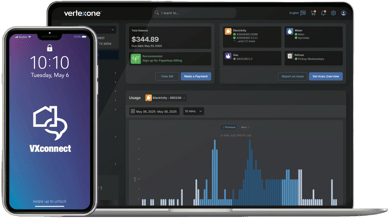 Platforms like VXconnect are designed to deliver this capability at scale, connecting AMI
and CIS data to personalized outreach across the channels customers already use, and giving utility teams the operational tools to manage that engagement systematically rather than reactively.
The Strategic Case for Starting Before the Next Crisis
Utilities that build engagement infrastructure now, before the next drought declaration, the next rate adjustment, or the next regulatory mandate, are not simply better prepared. They operate from a fundamentally different position.
Reactive engagement is expensive and limited. It is deployed under pressure, with compressed timelines, to customers who are already frustrated or confused. Proactive engagement, built into the utility's operating model and running continuously, compounds over time. Customers who receive personalized usage data across multiple billing cycles develop more durable conservation habits than those exposed to a single campaign. The effect is cumulative and self-reinforcing.
The utilities that will lead their regions through an era of sustained water stress are not necessarily those with the largest storage reserves or the most aggressive restrictions. They are the ones whose customers are consistently informed, genuinely supported, and actively engaged in the shared work of resource stewardship. That customer base does not emerge from a campaign. It is built — systematically, and through sustained engagement — over time.
The Next Horizon for Water Utilities
Mandates will continue to play a necessary role. They establish accountability, define performance standards, and give utilities the regulatory cover to ask more of their customers during scarcity events. None of that changes.
But mandates alone cannot produce what the next decade of water management will require: a customer base that conserves consistently, cooperates quickly, and trusts their utility to communicate with them honestly and usefully.
That customer base is built through engagement. Personalized, data-driven, sustained engagement that makes every customer a more informed steward of a shared resource.
The tools to build it exist. The data to fuel it is already being collected. The question now is whether utilities treat engagement as the strategic infrastructure it has become, or whether they wait for the next crisis to answer it for them.
The utilities that choose not to wait will not just meet their conservation mandates. They will build something more valuable: a community of customers who are active partners in managing the resource that everything else depends on.
For more on what you can do to help cultivate a conservation culture at your utility, download our Building a Conservation Culture E-Book: The Water Utilities Guide to Behavioral Change